
The verb to leave is only too often wrongly translated as partire or lasciare. For instance, many students fall into the trap of translating literally a sentence such as this:
I left home at 11
Ho "lasciato" la casa alle 11
This is wrong, as the verb lasciare has a narrower use in Italian. It is often used to convey the following meanings:
abandon = ha lasciato il marito
stop a sport/activity = ha lasciato il tennis
leave somebody on their own = ha lasciato solo il figlio per tutta la giornata
leave somebody with somebody else = ha lasciato la bambina con la zia
reserve/keep some food for somebody = ti ho lasciato una fetta di dolce
leave in inheritance = ha lasciato la casa ai figli
leave traces = lasciare le impronte sulla pistola
This is how you should translate leave in the sentence at the top:
I left home at 11 = sono uscito di casa alle 11
Sunday, 24 July 2011


Saturday, 9 July 2011
Ginestre spinose - Gorse Bushes
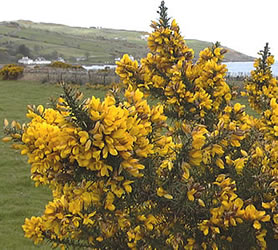
Pubblico una poesia della mia studentessa Sara, originariamente in inglese e che poi tradotta in italiano:
Rampant colonist, marching across the ancient land
Blazing yellow swathes down to the sea
Dense and impenetrable, its spiny fingers
Stretch to the cluster of islands drowning in mist
Colonizzatore rampante, marcia attraverso l'antica terra
Con sfolgoranti fasce gialle verso il mare
Dense e impenetrabili, le sue dita spinose
Si allungano verso le isole che annegano nella nebbia
Friday, 1 July 2011
Three men go to Venice
I prime due episodi della serie della BBC, in cui tre volti noti della TV si improvvisano esploratori dell'Adriatico in rotta verso Venezia:
http://www.bbc.co.uk/i/b0125t4z/
http://www.bbc.co.uk/i/b012b2ls/
http://www.bbc.co.uk/i/b0125t4z/
http://www.bbc.co.uk/i/b012b2ls/
Alla sbarra con Danilo Restivo

Nel corso degli ultimi due mesi ho assistito Danilo Restivo nel mio ruolo di interprete per l'intera durata del processo tenutosi a Winchester che, come è noto, si è concluso con la sua condanna all'ergastolo. Cliccate su questo link per leggere un ottimo articolo di Tobias Jones, che riassume alla perfezione i punti salienti della vicenda:
http://www.guardian.co.uk/uk/2011/jun/29/danilo-restivo-murder-conviction-iceberg
Lo sketch è stato gentilmente messo a disposizione da Tony Serpini della Serpini Pictures, autore della maggior parte dei servizi su Restivo trasmessi da Canale 5. L'autrice del disegno è Priscilla Coleman.
Saturday, 18 June 2011
Preposizioni
Prepositions are a sticky point in Italian; which ones should you use, when, and when should you not use them? Let’s look at one common mistake:
Vengo da Francia
Here the preposition "da" is the right choice, but needs to be combined to the definite article:
Vengo dalla Francia (I come from France)
Another mistake:
Vorrei un libro per leggere in vacanza
In this type of sentence, what should be used is not "per" but "da":
Vorrei un libro da leggere in vacanza (I’d like a book to read on holiday)
Here are some more examples about that point:
A Londra ci sono molte cose da vedere
In London there are many things to see)
Oggi ho molte cose da fare
(Today I have many things to do)
In frigo non c'è molto da mangiare
(In the fridge there isn’t much to eat)
And here are some sentences where the preposition is either unnecessary, missing, wrong or incomplete:
Partirò al weekend prossimo
Partirò il prossimo weekend
I’ll leave next weekend
Giocare calcio
Giocare a calcio
To play football
Mi alzo all’otto
Mi alzo alle otto
I get up at eight
Di fronte del parco
Di fronte al parco
In front of the park
La partita finisce a le mezzogiorno
La partita finisce a mezzogiorno
The match finishes at midday
Torno alla casa domani
Torno a casa a domani
I go back home tomorrow
Vengo da Francia
Here the preposition "da" is the right choice, but needs to be combined to the definite article:
Vengo dalla Francia (I come from France)
Another mistake:
Vorrei un libro per leggere in vacanza
In this type of sentence, what should be used is not "per" but "da":
Vorrei un libro da leggere in vacanza (I’d like a book to read on holiday)
Here are some more examples about that point:
A Londra ci sono molte cose da vedere
In London there are many things to see)
Oggi ho molte cose da fare
(Today I have many things to do)
In frigo non c'è molto da mangiare
(In the fridge there isn’t much to eat)
And here are some sentences where the preposition is either unnecessary, missing, wrong or incomplete:
Partirò al weekend prossimo
Partirò il prossimo weekend
I’ll leave next weekend
Giocare calcio
Giocare a calcio
To play football
Mi alzo all’otto
Mi alzo alle otto
I get up at eight
Di fronte del parco
Di fronte al parco
In front of the park
La partita finisce a le mezzogiorno
La partita finisce a mezzogiorno
The match finishes at midday
Torno alla casa domani
Torno a casa a domani
I go back home tomorrow
Sunday, 5 June 2011
I am going to..
I'm going to + verb should not be translated literally (in some cases). In French you would say: je vais + verb, in Italian such expression doesn't exist, unless of course what you mean to say is I am going from A to B, as in:
I’m going to Rome
Vado a Roma
Are you going to work today?
Vai a lavorare oggi?
I’m going to phone the police (if you are literally going from A to B in order to make the phone call)
Vado a telefonare alla polizia
If what you mean to do is signal a personal intention or make a prediction, do not use the verb “to go”. You should use instead the present tense, occasionally the future, or possibly the construction stare per + verb:
Today I’m going to throw away all my old clothes
Oggi butto tutti i miei vecchi vestiti
or
Oggi ho intenzione di buttare tutti i miei vecchi vestiti
When I grow up I’m going to be a pilot
Da grande farò il pilota
It is going to rain
Sta per piovere
I’m going to faint
Sto per svenire
I’m going to Rome
Vado a Roma
Are you going to work today?
Vai a lavorare oggi?
I’m going to phone the police (if you are literally going from A to B in order to make the phone call)
Vado a telefonare alla polizia
If what you mean to do is signal a personal intention or make a prediction, do not use the verb “to go”. You should use instead the present tense, occasionally the future, or possibly the construction stare per + verb:
Today I’m going to throw away all my old clothes
Oggi butto tutti i miei vecchi vestiti
or
Oggi ho intenzione di buttare tutti i miei vecchi vestiti
When I grow up I’m going to be a pilot
Da grande farò il pilota
It is going to rain
Sta per piovere
I’m going to faint
Sto per svenire
Monday, 30 May 2011
L'omo e la scimmia

Una poesia di Trilussa in dialetto romanesco, che si abbina bene alla foto della mia scimmietta di peluche!
L' Omo disse a la Scimmia:
-Sei brutta , dispettosa:
ma come sei ridicola!
ma quanto sei curiosa!
Quann' io te vedo, rido:
rido nun se sa quanto!...
La Scimmia disse : - Sfido!
T' arissomijo tanto
e adesso la versione in italiano:
L’Uomo disse alla Scimmia: “Sei brutta, dispettosa ma come sei ridicola! ma quanto sei curiosa! Quando io ti vedo, rido: rido non si sa quanto!…” La Scimmia disse:” Sfido! T’assomiglio così tanto! “
Saturday, 21 May 2011
How to say "stop"!
To stop typically can be translated as smettere and fermare. There are of course other possible translations, but I'll concentrate on these two, which are the most common and also the most commonly mixed up. As it is impossible to single out a rule that categorically says when you should use one or the other, the best thing to do is provide some examples of usage, which will show that smettere tends to be used in a more generic and abstract manner than fermare:
Smettere
Devi smettere di fumare
You must stop smoking
Mi stai dando fastidio, smettila! (smettila here is a generic request to stop doing something)
You are annoying me, stop it!
Ha appena smesso di piovere
It has just stopped raining
Smetto di fare questo lavoro se non mi danno un aumento
I’ll stop doing this job if they don’t give me a rise
Fermare
Ferma la macchina, voglio scendere
Stop the car, I want to get out
Ferma la registrazione
Stop the recording
Fermarsi (reflexive)
Fermati, mi stai facendo male
Stop it, you are hurting myself (I’m asking you to physically stop what you are doing)
Fermatevi a dormire a casa nostra
Stop to sleep at our house (we can put you up for the night)
Smettere
Devi smettere di fumare
You must stop smoking
Mi stai dando fastidio, smettila! (smettila here is a generic request to stop doing something)
You are annoying me, stop it!
Ha appena smesso di piovere
It has just stopped raining
Smetto di fare questo lavoro se non mi danno un aumento
I’ll stop doing this job if they don’t give me a rise
Fermare
Ferma la macchina, voglio scendere
Stop the car, I want to get out
Ferma la registrazione
Stop the recording
Fermarsi (reflexive)
Fermati, mi stai facendo male
Stop it, you are hurting myself (I’m asking you to physically stop what you are doing)
Fermatevi a dormire a casa nostra
Stop to sleep at our house (we can put you up for the night)
Tuesday, 10 May 2011
Proiezione di Io Sono l'Amore

On Friday 20th May at 6.45 pm in the Griffith lecture theatre the following film will be screened:
I Am Love (2009)
The film, directed by Luca Guadagnino, follows a haute bourgeoisie family through changing times and fortunes, and its disruption by the force of passion. The cast is led by Tilda Swinton as Emma Recchi. Co-producers Swinton and Guadagnino developed the film together over an 11-year period.
The film premiered in the United States at the 2010 Sundance Film Festival, and premiered in both the Venice Film Festival and the Toronto Film Festival.
The title is taken from a line from the aria 'La Mamma Morta', which is explored in the film Philadelphia (starring Tom Hanks and Denzel Washington), a scene which Emma is watching while in bed with her husband, during the film. The film's soundtrack uses pre-existing compositions by John Adams.
Thursday, 5 May 2011
Two greedy Italians
Cliccate sul link sottostante per vedere un bel programma TV della BBC sui legami tra cibo e famiglia in Italia:
http://www.bbc.co.uk/i/b0110c5x/
http://www.bbc.co.uk/i/b0110c5x/
Saturday, 30 April 2011
La notte in città
È bella di notte la città. C'è pericolo ma pure libertà. Ci girano quelli senza sonno, gli artisti, gli assassini, i giocatori, stanno aperte le osterie, le friggitorie, i caffè. Ci si saluta, ci si riconosce, tra quelli che campano di notte. Le persone si perdonano i vizi. La luce del giorno accusa, lo scuro della notte dà l'assoluzione. Escono i trasformati, uomini vestiti da donna, perché così gli dice la natura e nessuno li scoccia. Nessuno chiede conto di notte. Escono gli storpi, i ciechi, gli zoppi, che di giorno vengono respinti. È una tasca rivoltata, la notte nella città. Escono pure i cani, quelli senza casa. Aspettano la notte per cercare gli avanzi, quanti cani riescono a campare senza nessuno. Di notte la città è un paese civile.
tratto da Il giorno prima della felicità di Erri De Luca
tratto da Il giorno prima della felicità di Erri De Luca
Sunday, 17 April 2011
Food Programme 2
Cliccate qui per ascoltare la seconda puntata di Food programme, in cui viene esplorata la mafia in Sicilia e il modo in cui alcune imprese agro-alimentari hanno deciso di ribellarsi ai suoi tentacoli:
http://www.bbc.co.uk/iplayer/console/b0105rhg
http://www.bbc.co.uk/iplayer/console/b0105rhg
Saturday, 16 April 2011
Metà o Mezzo?
Some students of mine, when talking about their nationality, tell me that they are "half and half", for instance half English and half French. They say: sono mezzo/a inglese e mezzo/a francese. I correct them and say: sono metà inglese e metà francese. It would sound even better to add a preposition and say: sono per metà inglese e per metà francese.
Sometimes metà and mezzo can be used interchangeably, but always bear in mind that metà is an accented word and is unchanged, whereas mezzo does change gender and number as necessary. Here are some sentences that show you various uses of both words. In the last example both are possible (to some extend):
Le posso fare lo sconto della metà del prezzo
I can give you a discount of half the price
Arrivati a metà strada, si è rotta la macchina
Arrived half-way through, the car broke down
Arriviamo tra mezz’ora
We’ll arrive in half an hour
È mezzo matto
He is half mad (he is a bit crazy)
a. Vuoi tutta la mela? Do you want the whole apple?
b. No, solo la metà No, only half
c. No, solo mezza No, only half (more colloquial)
Notice that "mid" tends to be translated as "metà":
metà marzo = mid March
Sometimes metà and mezzo can be used interchangeably, but always bear in mind that metà is an accented word and is unchanged, whereas mezzo does change gender and number as necessary. Here are some sentences that show you various uses of both words. In the last example both are possible (to some extend):
Le posso fare lo sconto della metà del prezzo
I can give you a discount of half the price
Arrivati a metà strada, si è rotta la macchina
Arrived half-way through, the car broke down
Arriviamo tra mezz’ora
We’ll arrive in half an hour
È mezzo matto
He is half mad (he is a bit crazy)
a. Vuoi tutta la mela? Do you want the whole apple?
b. No, solo la metà No, only half
c. No, solo mezza No, only half (more colloquial)
Notice that "mid" tends to be translated as "metà":
metà marzo = mid March
Sunday, 10 April 2011
Proiezione di due film stranieri


On Monday 16th and Tuesday 17th May at 6.45 pm in the Griffith lecture theatre the following films will be screened:
Lunedì
El Orfanato (The Orphanage) 2007
Directed by Juan Antonio Bayona
Runtime time 1 hr. 45 min.
Genre: Drama, Horror, Mystery, Suspense
Laura purchases her beloved childhood orphanage with dreams of restoring and reopening the long abandoned facility as a place for disabled children. Once there, Laura discovers that the new environment awakens her son's imagination, but the ongoing fantasy games he plays with an invisible friend quickly turn into something more disturbing. Upon seeing her family increasingly threatened by the strange occurrences in the house, Laura looks to a group of parapsychologists for help in unravelling the mystery that has taken over the place
Martedì
Le gout des autres (The Taste of Others) 2000
Runtime time 112 minutes
Genre: Comedy, Drama, Romance
Factory owner Castella is trapped in an unhappy marriage with a wife who spends more time cluttering up their home with chintz than showing genuine affection. Frustrated and unloved, he falls madly in love with an actress in a local theatre production - who just happens to be the English teacher he fired a few days earlier.
Tuesday, 5 April 2011
Food Programme
Cliccate sul link per ascoltare la trasmissione di Radio 4 The Food Programme, in cui si parla del modo in cui l'Unificazione italiana ha influito (o meno ) sulle traduzioni culinarie in Sicilia
http://www.bbc.co.uk/i/zzn2f/
http://www.bbc.co.uk/i/zzn2f/
Monday, 4 April 2011
Festival del Cinema Italiano
Ringrazio Roger per avermi segnalato il festival del Cinema in corso in questo momento a Londra, fino al 10 aprile, presso i Riverside Studios di Hammersmith. Cliccate sul link sottostante per avere ulteriori informazioni:
http://www.riversidestudios.co.uk/cgi-bin/season.pl?f=Italian%20Cinema%20London
http://www.riversidestudios.co.uk/cgi-bin/season.pl?f=Italian%20Cinema%20London
Saturday, 12 March 2011
Proiezione di Bellissima
On Friday 25th March at 6.00 pm in the Griffith lecture theatre there will be the screening of Bellissima, a 1951 neorealist film directed by Luchino Visconti
Runtime 115 minutes
Genre: Drama
Maddalena (Anna Magnani) is a screenstruck mother convinced of her daughter Maria’s (Tina Apicella) star potential. Dreaming of a better life for her family – as a means of escape from the struggles of everyday existence in working-class Rome – she invests everything, including her last penny, into the dream that her daughter will be discovered at an open casting. However, on overhearing the film crew’s candid assessment of her daughter’s audition (in what Variety described in 1952 as “one of the cruellest scenes ever filmed”) Maddalena is forced to reconsider her views on the film industry and its world of illusions.
Runtime 115 minutes
Genre: Drama
Maddalena (Anna Magnani) is a screenstruck mother convinced of her daughter Maria’s (Tina Apicella) star potential. Dreaming of a better life for her family – as a means of escape from the struggles of everyday existence in working-class Rome – she invests everything, including her last penny, into the dream that her daughter will be discovered at an open casting. However, on overhearing the film crew’s candid assessment of her daughter’s audition (in what Variety described in 1952 as “one of the cruellest scenes ever filmed”) Maddalena is forced to reconsider her views on the film industry and its world of illusions.
Tuesday, 8 March 2011
Una citazione di Luigi Barzini
In the heart of every man, wherever he is born, whatever his education and tastes, there is one small corner which is Italian, that part which finds regimentation irksome, the dangers of war frightening, strict morality stifling, that part which loves frivolous and entertaining art, admires larger-than-life-size solitary heroes, and dreams of an impossible liberation from the strictures of a tidy existence
Friday, 4 March 2011
Livemocha
One of my best students, Douglas Corr, has recently sent me this email about Livemocha. His email was so thorough and the information so well explained that I thought it deserved to be reproduced "verbatim":
Dear Valeria,
I read about Livemocha in the buisiness pages of the Independent about 10 days ago, it was in an article about a business venture with Harper Collins.
It's roughly a sort of Facebook for language learning ( I think there are 35 languages!).
http://www.livemocha.com
It has free functionality as well as stuff that you have to pay for. I have been investigating the free functions for Italian and German. It seems to me to be suitable for beginers up to around the level of our class, but I think there is possibly unlimited potential for conversation.
Basically there are:
* Written exercises
* Spoken exercises
* Flip cards
* Chat
The written and spoken exercises are marked by native speakers who are other learners and who select which ones they mark; this means you are not guaranteed to get your work marked (but see friends below).
You improve your status on the site by doing exercises and by marking exercises - you get a score and various awards.
To make progress you need to find others learning English so that they can help you and you can help them in return - these people become your friends. This helps you to get your things marked. So I tried to find Italians and Germans learning English, and I now have 12 friends! I marked so much stuff last week I became English Tutor of the Week! This will help to ensure that my requests to be a friend don't get rejected. I have had some very kind encouraging comments from people...
I haven't tried the Chat yet (with microphone); this seems to me to be potentially the most useful -although a bit daunting to start... My objective is to try this out before the end of March.
There seems to be a vast number of people from all countries learning English, especially from China, Portugal, Brazil, Spain, Roumania and Russia. There is a much smaller number learning German and less still learning Italian.
I'm sure you will find this an exciting learning tool for students.
Dear Valeria,
I read about Livemocha in the buisiness pages of the Independent about 10 days ago, it was in an article about a business venture with Harper Collins.
It's roughly a sort of Facebook for language learning ( I think there are 35 languages!).
http://www.livemocha.com
It has free functionality as well as stuff that you have to pay for. I have been investigating the free functions for Italian and German. It seems to me to be suitable for beginers up to around the level of our class, but I think there is possibly unlimited potential for conversation.
Basically there are:
* Written exercises
* Spoken exercises
* Flip cards
* Chat
The written and spoken exercises are marked by native speakers who are other learners and who select which ones they mark; this means you are not guaranteed to get your work marked (but see friends below).
You improve your status on the site by doing exercises and by marking exercises - you get a score and various awards.
To make progress you need to find others learning English so that they can help you and you can help them in return - these people become your friends. This helps you to get your things marked. So I tried to find Italians and Germans learning English, and I now have 12 friends! I marked so much stuff last week I became English Tutor of the Week! This will help to ensure that my requests to be a friend don't get rejected. I have had some very kind encouraging comments from people...
I haven't tried the Chat yet (with microphone); this seems to me to be potentially the most useful -although a bit daunting to start... My objective is to try this out before the end of March.
There seems to be a vast number of people from all countries learning English, especially from China, Portugal, Brazil, Spain, Roumania and Russia. There is a much smaller number learning German and less still learning Italian.
I'm sure you will find this an exciting learning tool for students.
Sunday, 20 February 2011
Is the subjunctive on its way to extinction?
My answer to this question is a resounding no. The subjunctive, the mood of uncertainty and politeness, is still very much in use in the Italian language, particularly in formal and written register, and to some extent it separates out those who have had a good education from those who haven't (but it must be stressed that Italians don't always get it right, and even when they are highly educated, they might intentionally choose to replace it with the indicative (penso che sia becomes penso che è), to sound more natural and less aloof). Leaving aside socio-linguistic considerations, one of the main reasons why the subjective is sometime perceived as awkward is that the first three persons of the singular form are identical, which can lead to ambiguity. For instance:
Vorrei che faccia come dico io
can be translated as I’d like you to do as I say
or
I’d like he/she to do as I say.
The only way to get round this ambiguity (if the context doesn’t help) is to add the subject pronoun:
Vorrei che tu faccia come dico io
Vorrei che lui/lei faccia come dico io
There are cases in which the subjunctive can’t be avoided, for instance after the word affinchè. But of course it's also quite easy to avoid saying affinchè and therefore avoid the subjunctive altogether. This is typical of spoken Italian where, for convenience of use and speed, the imperfect subjunctive is often replaced by the imperfect of the indicative:
Franco pensava che il treno arrivasse in ritardo (subjunctive - formal/written language)
Franco pensava che il treno arrivava in ritardo (imperfect - informal/spoken language)
Vorrei che faccia come dico io
can be translated as I’d like you to do as I say
or
I’d like he/she to do as I say.
The only way to get round this ambiguity (if the context doesn’t help) is to add the subject pronoun:
Vorrei che tu faccia come dico io
Vorrei che lui/lei faccia come dico io
There are cases in which the subjunctive can’t be avoided, for instance after the word affinchè. But of course it's also quite easy to avoid saying affinchè and therefore avoid the subjunctive altogether. This is typical of spoken Italian where, for convenience of use and speed, the imperfect subjunctive is often replaced by the imperfect of the indicative:
Franco pensava che il treno arrivasse in ritardo (subjunctive - formal/written language)
Franco pensava che il treno arrivava in ritardo (imperfect - informal/spoken language)
Tuesday, 25 January 2011
Carpets and walls
Many houses in the UK have carpets, but this is very rare in Italy. That's probably why we had to borrow the French word la moquette to indicate the carpet. I’ve noticed that the vast majority of students, when looking to translate carpet, resort to tappeto, perhaps because they are misled by their dictionary. But tappeto means rug not carpet! Unless what you are trying to convey is something slightly less mundane such as: carpet of leaves = tappeto di foglie.
And did you know that the walls in a house are called pareti?
Appendiamo il quadro su quella parete
Let’s hang the painting on that wall
La parete is an internal wall within a house or a building, which has been properly done up and decorated. Il muro is a much more generic expression which refers to any wall, in or out of a building. If the wall is a big one, for instance the one surrounding an old town, than it becomes feminine (and it is only used as a plural):
Le antiche mura della città
The ancient walls of the town
The big wall in China is la (grande) muraglia cinese
And did you know that the walls in a house are called pareti?
Appendiamo il quadro su quella parete
Let’s hang the painting on that wall
La parete is an internal wall within a house or a building, which has been properly done up and decorated. Il muro is a much more generic expression which refers to any wall, in or out of a building. If the wall is a big one, for instance the one surrounding an old town, than it becomes feminine (and it is only used as a plural):
Le antiche mura della città
The ancient walls of the town
The big wall in China is la (grande) muraglia cinese
Saturday, 22 January 2011
Proiezione di Mar Adentro
On Tuesday 8th February at 6.45 pm in 03MS01 there will be the screening of the Spanish film Sea Inside (Mar Adentro - 2005) by Alejandro Amenábar
Runtime 126 minutes
Genre: Biography / Drama
More information about the film can be found on this link:
http://www.bbc.co.uk/films/2005/02/01/the_sea_inside_2005_review.shtml
Runtime 126 minutes
Genre: Biography / Drama
More information about the film can be found on this link:
http://www.bbc.co.uk/films/2005/02/01/the_sea_inside_2005_review.shtml
Tuesday, 18 January 2011
Un'altra comunicazione di servizio!
The screening of the film Io non ho paura has been rescheduled for Friday 4th February at 6.45 pm (all other details stay unchanged).
Saturday, 15 January 2011
Comunicazione di servizio!
Unfortunately the DVD player in the Management lecture theatre isn't working at the moment so I'll have to cancel my film screening scheduled for the 19th of January. There will be a new post once the film has been rescheduled.
Tuesday, 11 January 2011
Falsi amici
Should subject be translated as soggetto? It really all depends what you are trying to say. If the subject you are referring to is a grammar concept, than by all means. But if what you are referring to is "topic", than the answer is no, in that case the translation is argomento:
Let's change the subject
Cambiamo argomento
If the subject you have in mind indicates what you study at school or university, for instance mathematics, history etc. than the right translation is materia.
Che materie studi all’università?
What subjects are you studying at University?
Another extremely common false friend is classe, instead of lezione: “I'm going to my Italian class tonight", should not be translated as "Vado a classe di Italiano stasera". You should say instead “Vado a lezione di italiano”. Classe, in a school context, indicates a classroom or a grouping of students by age, level or subject.
Let’s not forget about unfortunately, or sadly, which tend to be translated as “tristemente”. And sadly this is wrong most of the time.. “Tristemente” in Italian is only used to indicate a really sad state of affairs. And when I say “sad”, I mean “weeping sad”. In most cases, it's unlikely the word you are going to need is “tristemente”, so better opt for purtroppo:
Sadly / unfortunately I was forced to leave a job I really loved
Purtroppo sono stato costretto a lasciare un lavoro che mi piaceva molto
Let's change the subject
Cambiamo argomento
If the subject you have in mind indicates what you study at school or university, for instance mathematics, history etc. than the right translation is materia.
Che materie studi all’università?
What subjects are you studying at University?
Another extremely common false friend is classe, instead of lezione: “I'm going to my Italian class tonight", should not be translated as "Vado a classe di Italiano stasera". You should say instead “Vado a lezione di italiano”. Classe, in a school context, indicates a classroom or a grouping of students by age, level or subject.
Let’s not forget about unfortunately, or sadly, which tend to be translated as “tristemente”. And sadly this is wrong most of the time.. “Tristemente” in Italian is only used to indicate a really sad state of affairs. And when I say “sad”, I mean “weeping sad”. In most cases, it's unlikely the word you are going to need is “tristemente”, so better opt for purtroppo:
Sadly / unfortunately I was forced to leave a job I really loved
Purtroppo sono stato costretto a lasciare un lavoro che mi piaceva molto
Saturday, 8 January 2011
Un commento di Aidan Marks
Pubblico un commento inviatomi da Aidan Marks, che mi ha contattato dopo aver letto il mio libro in Australia. Lo ringrazio caldamente per le sue parole di apprezzamento.
> I just finished reading your book, 50 Ways to Improve Your Italian and
> wanted to thank you for putting together a clear and concise reference
> that answered many of the questions that have come up during my first
> year of Italian study, especially the more subtle ones.
>
> Additionally, I would like to mention that you were able to explain
> certain things that even our experienced native teacher (who speaks very
> fluent english for over 25 years) could not. I suspect that your high
> proficiency in english had a lot to do with it.
>
> Naturally I will be recommending your book to others in my class here in
> Sydney, Australia. I hope that you plan to continue formalising more of
> your knowledge and experience into future books. Just in the area of
> grammar alone, I have five of them written in english and none of them
> are very satisfactory. It is a constant game to find answers.
>
> Once again, thank you for taking the time to put this book together.
> I just finished reading your book, 50 Ways to Improve Your Italian and
> wanted to thank you for putting together a clear and concise reference
> that answered many of the questions that have come up during my first
> year of Italian study, especially the more subtle ones.
>
> Additionally, I would like to mention that you were able to explain
> certain things that even our experienced native teacher (who speaks very
> fluent english for over 25 years) could not. I suspect that your high
> proficiency in english had a lot to do with it.
>
> Naturally I will be recommending your book to others in my class here in
> Sydney, Australia. I hope that you plan to continue formalising more of
> your knowledge and experience into future books. Just in the area of
> grammar alone, I have five of them written in english and none of them
> are very satisfactory. It is a constant game to find answers.
>
> Once again, thank you for taking the time to put this book together.
Tuesday, 4 January 2011
Proiezione di Io non ho paura
On Wednesday 19 January at 6.45 pm in 03MS01 there will be the screening of the Italian film Io non ho paura (2003)by Gabriele Salvatores
Runtime 108 minutes
Genre: Crime / Drama
In southern Italy, Michele, a bright ten-year-old boy, finds a filthy, incoherent boy chained in a cellar hidden outside his village, but fears to speak of it. Putting together what he learns from television, he begins to connect the boy, his own impoverished parents, and a series of unexplained visiting strangers, with a high-profile kidnapping that has the entire nation on edge.
Seats allocated on a first come, first served basis
Runtime 108 minutes
Genre: Crime / Drama
In southern Italy, Michele, a bright ten-year-old boy, finds a filthy, incoherent boy chained in a cellar hidden outside his village, but fears to speak of it. Putting together what he learns from television, he begins to connect the boy, his own impoverished parents, and a series of unexplained visiting strangers, with a high-profile kidnapping that has the entire nation on edge.
Seats allocated on a first come, first served basis
Saturday, 1 January 2011
Una Filastrocca di Capodanno di Gianni Rodari
Fammi gli auguri per tutto l'anno:
voglio un gennaio col sole d'aprile,
un luglio fresco, un marzo gentile,
voglio un giorno senza sera,
voglio un mare senza bufera,
voglio un pane sempre fresco,
sul cipresso il fiore del pesco,
che siano amici il gatto e il cane,
che diano latte le fontane.
Se voglio troppo non darmi niente,
dammi una faccia allegra solamente
voglio un gennaio col sole d'aprile,
un luglio fresco, un marzo gentile,
voglio un giorno senza sera,
voglio un mare senza bufera,
voglio un pane sempre fresco,
sul cipresso il fiore del pesco,
che siano amici il gatto e il cane,
che diano latte le fontane.
Se voglio troppo non darmi niente,
dammi una faccia allegra solamente
Rick Stein's Taste of Italian Opera
Un altro programma interessante della BBC4, nel quale si analizza il ruolo che ha svolto il cibo nella creazione dell'Opera:
http://www.bbc.co.uk/i/sm1g0/
http://www.bbc.co.uk/i/sm1g0/
Tuesday, 28 December 2010
Italian noir
Cliccate qui per vedere un bel programma di BBC 4 sulla storia del cinema e della fiction italiana che ruota intorno al tema della criminalità:
http://www.bbc.co.uk/i/wwlll/
http://www.bbc.co.uk/i/wwlll/
Monday, 20 December 2010
The good, the bad and the ugly
Have you noticed that buono (good) is often translated as "bravo" in Italian? Bravo is a multi-faceted word with a variety of meanings, for instance: skilled, clever or well-behaved: It is of course also used to show our delight at a show or performance (and should always agree in gender and number): Bravo! Brava! Bravi! Brave!
Two good singers = due bravi cantanti / due cantanti bravi
A very good doctor = una dottoressa molto brava
A very good child = un bambino molto bravo/bravissimo
Notice that when buono (singular only) is put before a noun, in strict grammatical terms it should follows the same rule as the indefinite article. In fact, nowadays this doesn't always happen, as buon tends to be used instead:
Uno studio
Un buono studio/Un buon studio
Un pranzo
Un buon pranzo
If you have a bad knee don’t say: ho un brutto (ugly) ginocchio or ho un cattivo ginocchio.......
You can’t translate bad literally and need to find a different turn of phrase to describe that or similar illnesses or conditions. If what you mean is that your knee hurts, you could say: “mi fa male il ginocchio”.
Two good singers = due bravi cantanti / due cantanti bravi
A very good doctor = una dottoressa molto brava
A very good child = un bambino molto bravo/bravissimo
Notice that when buono (singular only) is put before a noun, in strict grammatical terms it should follows the same rule as the indefinite article. In fact, nowadays this doesn't always happen, as buon tends to be used instead:
Uno studio
Un buono studio/Un buon studio
Un pranzo
Un buon pranzo
If you have a bad knee don’t say: ho un brutto (ugly) ginocchio or ho un cattivo ginocchio.......
You can’t translate bad literally and need to find a different turn of phrase to describe that or similar illnesses or conditions. If what you mean is that your knee hurts, you could say: “mi fa male il ginocchio”.
Sunday, 19 December 2010
Il panettone
Cliccate qui per ascoltare il programma The Food Programme, dove si parla della storia e della produzione del panettone:
http://www.bbc.co.uk/i/wntyn/
http://www.bbc.co.uk/i/wntyn/
Thursday, 16 December 2010
Vita e morte a Pompei
Cliccate sul link sottostante per vedere la trasmissione su Pompei andata in onda pochi giorni fa sulla BBC4 (disponibile per un tempo limitato!):
http://www.bbc.co.uk/i/wqfcx/
http://www.bbc.co.uk/i/wqfcx/
Tuesday, 14 December 2010
Natale italiano
Cliccate qui per poter leggere un articolo della BBC sugli usi e costumi degli italiani a Natale:
http://www.bbc.co.uk/languages/christmas/italian/
http://www.bbc.co.uk/languages/christmas/italian/
Tuesday, 30 November 2010
L'isola che non c'è
Ecco una bella canzone di Edoardo Bennato che risale agli anni '80:
http://www.youtube.com/watch?v=BlMJdddUxOw&feature=related
E qui trovate il testo:
http://www.italianissima.net/testi/lisolach.htm
http://www.youtube.com/watch?v=BlMJdddUxOw&feature=related
E qui trovate il testo:
http://www.italianissima.net/testi/lisolach.htm
Friday, 26 November 2010
Titles in politics
If you have a look at the Italian press or listen to the news, you’ll notice that politicians and other personalities are all referred to by their surname or by name and surname: no title such as signor or signora is added. If a politician is a minister, you may notice the word Ministro, in front of a surname, or the word Onorevole for a member of the Camera (the chamber of deputees). Senatore is reserved to members of Senato:
Il ministro Germini
L’onorevole Biondi
Il senatore Andreotti
The prime minister is usually referred to as "il premier” + their surname, for instance: il premier Berlusconi
The president of the republic is commonly referred to "Presidente della Repubblica" or “Presidente + surname”. Occasionally he is simply addressed by surname (particularly after he has already been called “Presidente” at least once the beginning of the report). His wife is normally addressed to as "signora" + "christian name:
Il presidente Napolitano ha visitato il luogo del terremoto. Napolitano ha poi incontrato i familiari delle vittime.
President Napolitano visited the earthwake site. He then met the victims’ relatives.
Il presidente Ciampi e sua moglie, la signora Franca
President Ciampi and his wife, Mrs Franca
Il ministro Germini
L’onorevole Biondi
Il senatore Andreotti
The prime minister is usually referred to as "il premier” + their surname, for instance: il premier Berlusconi
The president of the republic is commonly referred to "Presidente della Repubblica" or “Presidente + surname”. Occasionally he is simply addressed by surname (particularly after he has already been called “Presidente” at least once the beginning of the report). His wife is normally addressed to as "signora" + "christian name:
Il presidente Napolitano ha visitato il luogo del terremoto. Napolitano ha poi incontrato i familiari delle vittime.
President Napolitano visited the earthwake site. He then met the victims’ relatives.
Il presidente Ciampi e sua moglie, la signora Franca
President Ciampi and his wife, Mrs Franca
Thursday, 11 November 2010
IN
Another mistake is due to the fact that we use
Notice that “within” is translated as “entro”:
The milk has to be drunk within a week:
Il latte deve essere bevuto entro una settimana
There are of course many other cases in which in can be left as it is. For instance, if what you need to say is along these lines, than you do need a literal translation:
In less than 10 years the price of housing as gone up by 30%
In meno di 10 anni il prezzo delle case è aumentato del 30 %.
Thursday, 4 November 2010
On the subject of subjects
The most common subject pronouns in Italian are: io, tu, lui, lei, noi, voi, loro. These are the pronouns you are most likely to need. There are a few more that you still occasionally might come across. I say occasionally as they are relegated to formal and written style. The most important are egli (he) and esso / essa (it), essi / esse (them).
You might come across egli in a religious or ancient text - but if you were to use it nowadays you would sound extremely pedantic and unnatural: a relict from ancient history! Esso and its variants are a bit more resistant to natural extinction, but tend to be confined to bureaucratic and formal registers. Therefore, a sentence such as the one below is utterly and completely wrong (it’s an extract from an email one of my students sent me – a self-confessed user of machine translation!):
Sono stato in Italia in vacanza. Esso è stato meraviglioso (sbagliato!)
Sono stato in Italia in vacanza. È stato meraviglioso (giusto)
I have been on holiday in Italy. It was wonderful
Some examples of correct use of esso:
Ecco la lettera e il documento ad essa allegato
Here is the letter and the document attached to it
La biblioteca contiene oltre 10 000 volumi. Molti di essi sono stati restaurati
The library has over 10,000 books. Many of them have been repaired
Qui c’era l’antica città. Su di essa è stata costruita la città nuova
Here there was the old town. On it was built the new one
You might come across egli in a religious or ancient text - but if you were to use it nowadays you would sound extremely pedantic and unnatural: a relict from ancient history! Esso and its variants are a bit more resistant to natural extinction, but tend to be confined to bureaucratic and formal registers. Therefore, a sentence such as the one below is utterly and completely wrong (it’s an extract from an email one of my students sent me – a self-confessed user of machine translation!):
Sono stato in Italia in vacanza. Esso è stato meraviglioso (sbagliato!)
Sono stato in Italia in vacanza. È stato meraviglioso (giusto)
I have been on holiday in Italy. It was wonderful
Some examples of correct use of esso:
Ecco la lettera e il documento ad essa allegato
Here is the letter and the document attached to it
La biblioteca contiene oltre 10 000 volumi. Molti di essi sono stati restaurati
The library has over 10,000 books. Many of them have been repaired
Qui c’era l’antica città. Su di essa è stata costruita la città nuova
Here there was the old town. On it was built the new one
Tuesday, 2 November 2010
Proiezione di Pranzo di Ferragosto
At the University of Surrey on Monday 6th December at 6.45 pm in 03MS01 there will be the screening of the Italian film "Pranzo di Ferragosto". Details as follows:
Pranzo di Ferragosto (Mid-August Lunch) - 2008
Runtime 75 minutes
Genre: Comedy / Drama
An impoverished man agrees to take care of three elderly women for two days in August as a favour to his landlord.
A rare example of sophisticated Italian comedy with excellent acting. Winner of the Future Golden Lion in Venice and Satyajit Ray Award at the London Film Festival in 2008
Seats allocated on a first come, first served basis. There will be a presentation before the screening and a discussion afterwards
Pranzo di Ferragosto (Mid-August Lunch) - 2008
Runtime 75 minutes
Genre: Comedy / Drama
An impoverished man agrees to take care of three elderly women for two days in August as a favour to his landlord.
A rare example of sophisticated Italian comedy with excellent acting. Winner of the Future Golden Lion in Venice and Satyajit Ray Award at the London Film Festival in 2008
Seats allocated on a first come, first served basis. There will be a presentation before the screening and a discussion afterwards
Thursday, 21 October 2010
Si parla di lingue straniere alla radio
Cliccate qui per ascoltare un'interessante intervista radiofonica tenuta proprio questa mattina dalla mia collega Sieglinde Ward sul tema delle lingue straniere e degli errori che si ripetono:
http://www.bbc.co.uk/iplayer/episode/p00bl7vv/Surrey_Breakfast_with_Nick_Wallis_21_10_2010/
L'intervista la trovate verso la fine, intorno al punto 2.42
http://www.bbc.co.uk/iplayer/episode/p00bl7vv/Surrey_Breakfast_with_Nick_Wallis_21_10_2010/
L'intervista la trovate verso la fine, intorno al punto 2.42
Saturday, 16 October 2010
Proiezione di un film francese
Just a reminder that on Wednesday 10 November at 6.45 pm in 03MS01 the following French film will be screened at the University of Surrey:
Paris (2008)
by Cédric Klapisch with Juliette Binoche and Roman Duris
Runtime time 125 minutes
Genre: Comedy, Drama, Romance
Pierre, a professional dancer, suffers from a serious heart disease. While he is waiting for a transplant which may (or may not) save his life, he has nothing better to do than look at the people around him, from the balcony of his Paris apartment. When Elise, his sister with three kids and no husband, moves in to his place to care for him, Pierre does not change his new habits. And instead of dancing himself, it is Paris and the Parisians who dance before his eyes
Seats allocated on a first come, first served basis. There will be a presentation before the screening and a discussion afterwards
Paris (2008)
by Cédric Klapisch with Juliette Binoche and Roman Duris
Runtime time 125 minutes
Genre: Comedy, Drama, Romance
Pierre, a professional dancer, suffers from a serious heart disease. While he is waiting for a transplant which may (or may not) save his life, he has nothing better to do than look at the people around him, from the balcony of his Paris apartment. When Elise, his sister with three kids and no husband, moves in to his place to care for him, Pierre does not change his new habits. And instead of dancing himself, it is Paris and the Parisians who dance before his eyes
Seats allocated on a first come, first served basis. There will be a presentation before the screening and a discussion afterwards
Monday, 4 October 2010
Proiezione di un film spagnolo
On Thursday 21st October at 6.45 pm in 03MS01 there will be the screening of a Spanish film open to all students and staff at the University of Surrey:
El secreto de sus ojos (The secret in their eyes) - 2009
Runtime 127 minutes
Genre: Drama, Mystery, Romance
Unpredictable and rich with symbolism, this Argentinean murder mystery lives up to its Oscar with an engrossing plot, Juan José Campanella's assured direction, and mesmerizing performances from its cast.
Seats allocated on a first come, first served basis. There will be a presentation before the screening and a discussion afterwards
El secreto de sus ojos (The secret in their eyes) - 2009
Runtime 127 minutes
Genre: Drama, Mystery, Romance
Unpredictable and rich with symbolism, this Argentinean murder mystery lives up to its Oscar with an engrossing plot, Juan José Campanella's assured direction, and mesmerizing performances from its cast.
Seats allocated on a first come, first served basis. There will be a presentation before the screening and a discussion afterwards
Friday, 1 October 2010
Un programma sulla pasta
Se cliccate su questo link potrete ascoltare un interessante programma sulla pasta, trasmesso da Radio 4 nell'ambito della trasmissione The Food Programme.
Ecco il link:
http://www.bbc.co.uk/i/tx49y/
Ecco il link:
http://www.bbc.co.uk/i/tx49y/
Tuesday, 28 September 2010
Massacro a Roma
Sull’iPlayer c’è attualmente un film italiano con Marcello Mastroianni intitolato Massacro a Roma. Potete accedervi se cliccate su questo link: http://www.bbc.co.uk/i/84b85/
Il film sarà disponibile fino al 4 ottobre, quindi se volete vederlo affrettatevi!
Il film sarà disponibile fino al 4 ottobre, quindi se volete vederlo affrettatevi!
Saturday, 25 September 2010
proiezione di un film tedesco il 6 di ottobre
For once I won't be talking about Italian but German!
If you are a University of Surrey student, you are very welcome to attend the screening of the following German film on 6 October:
Goodbye Lenin! (2003)
Running time 118 minutes
Genre: Comedy, Drama, World Cinema
East Germany, the year 1989: A young man protests against the regime. His mother watches the police arresting him and suffers a heart attack and falls into a coma. Some months later, the GDR does not exist anymore and the mother awakes. Since she has to avoid every excitement, the son tries to set up the GDR again for her in their flat. But the world has changed a lot.
Seats allocated on a first come, first served basis. There will be a presentation before the screening and a discussion afterwards
If you are a University of Surrey student, you are very welcome to attend the screening of the following German film on 6 October:
Goodbye Lenin! (2003)
Running time 118 minutes
Genre: Comedy, Drama, World Cinema
East Germany, the year 1989: A young man protests against the regime. His mother watches the police arresting him and suffers a heart attack and falls into a coma. Some months later, the GDR does not exist anymore and the mother awakes. Since she has to avoid every excitement, the son tries to set up the GDR again for her in their flat. But the world has changed a lot.
Seats allocated on a first come, first served basis. There will be a presentation before the screening and a discussion afterwards
Thursday, 16 September 2010
Ricette della nonna
Cliccate su questo link per accedere a un brano radiofonico trasmesso proprio oggi da Radio 4 nell'ambito del programma Woman's Hour, in cui si parla delle ricette della nonna dal punto di vista di alcune signore italo-americane:
http://www.bbc.co.uk/programmes/b00tnb7s#p00b2f95
http://www.bbc.co.uk/programmes/b00tnb7s#p00b2f95
Sunday, 15 August 2010
Una massima sui difetti
Mi piace molto questa massima di François de La Rochefoucauld. Racchiude in poche semplici parole una grande verità:
Certi difetti, messi bene a frutto, brillano più della virtù stessa
Certi difetti, messi bene a frutto, brillano più della virtù stessa
Monday, 19 July 2010
Saturday, 26 June 2010
Thursday, 10 June 2010
Pavarotti e Puccini
Ancora due trasmissioni da non perdere sull'Opera:
Pavarotti
http://bbc.co.uk/i/8l391/
Puccini
http://bbc.co.uk/i/spgk8/
Pavarotti
http://bbc.co.uk/i/8l391/
Puccini
http://bbc.co.uk/i/spgk8/
Wednesday, 9 June 2010
Valentino
Cliccate qui per poter guardare il programma su Valentino trasmesso da BBC4 per celebrare i 45 anni di carriera dello stilista:
http://bbc.co.uk/i/spgkb/
http://bbc.co.uk/i/spgkb/
Monday, 31 May 2010
Opera Italia
Se siete appassionati di Opera non fatevi sfuggire la serie televisiva di BBC4 intitolata Opera Italia, e in particolare la trasmissione in onda il prossimo mercoledi 2 giugno.
Cliccando su questi link troverete invece le trasmissione andate in onda la settimana scorsa, incentrate sugli albori dell'Opera italiana e su Verdi:
http://bbc.co.uk/i/sjdmp/
http://bbc.co.uk/i/sm18t/
Cliccando su questi link troverete invece le trasmissione andate in onda la settimana scorsa, incentrate sugli albori dell'Opera italiana e su Verdi:
http://bbc.co.uk/i/sjdmp/
http://bbc.co.uk/i/sm18t/
Friday, 28 May 2010
La telefonata - Carlo Verdone
Cliccate qui per vedere un divertente sketch televisivo del 1983 che ha come protagonista un noto attore e regista italiano, Carlo Verdone:
Attenzione a queste parole:
cascare (colloquiale) = cadere
stritolare/stritolato = ground (run over)
camion = truck
targa = number plate
bara = coffin
mannaggia (colloquiale) = damn
che guaio = che problema
si figuri = don't mention it
mo (dialetto romano) = ora/adesso
chiodo = nail
saldato = joined
ricoverato/a = admitted to hospital
mina = mine
Attenzione a queste parole:
cascare (colloquiale) = cadere
stritolare/stritolato = ground (run over)
camion = truck
targa = number plate
bara = coffin
mannaggia (colloquiale) = damn
che guaio = che problema
si figuri = don't mention it
mo (dialetto romano) = ora/adesso
chiodo = nail
saldato = joined
ricoverato/a = admitted to hospital
mina = mine
Sunday, 23 May 2010
Il corpo delle donne
Cliccate qui per ascoltare un brano tratto dal programma radiofonico Woman's Hour in cui si parla della rappresentazione delle donne nella TV italiana:
http://www.bbc.co.uk/programmes/b00sbtmf#p007zhby
Cliccando invece su questo link troverete il documentario (in varie lingue) realizzato da Lorella Zanardo su questo tema:
http://www.ilcorpodelledonne.net/?page_id=91
http://www.bbc.co.uk/programmes/b00sbtmf#p007zhby
Cliccando invece su questo link troverete il documentario (in varie lingue) realizzato da Lorella Zanardo su questo tema:
http://www.ilcorpodelledonne.net/?page_id=91
Thursday, 13 May 2010
Top 100 Language Blogs 2010 Award
I'm proud to announce that my blog was nominated for the Top 100 Language Blogs 2010 (teaching category). I've included below a voting button for those of you who would like to to vote for me.
The voting phase starts on May 12th and ends on May 24th.

The voting phase starts on May 12th and ends on May 24th.
Saturday, 8 May 2010
La pasta e le sue variegate forme
Se volete saperne un po' di più sulla pasta e le sue molteplici forme (oltre 300), cliccate qui:
http://www.bbc.co.uk/programmes/b00s5h5s#p007rc2d
http://www.bbc.co.uk/programmes/b00s5h5s#p007rc2d
Saturday, 1 May 2010
Le ali della sfinge

Se siete all'Università di Guildford, alle 18.45 di martedì 4 maggio, presso la sala 03MS01 potrete assistere alla proiezione di Montalbano - Le ali della Sfinge, un film tratto dalla notissima serie di romanzi polizieschi di Cammilleri.
Il romanzo è stato pubblicato nel 2006, mentre la trasposizione in film è avvenuta nel 2008. Questa volta Montalbano è alla ricerca dell'assassino di una giovane donna il cui unico segno di riconoscimento è il tatuaggio di una farfalla sulla spalla.
Friday, 23 April 2010
Sul tema delle bistecche
My students often ask me how to order a rare, medium, well cooked or “pink inside” steak.
“Pink inside” is not something we would normally say in Italian, but if you really would prefer to have a "pink-inside” steak, say: “rosa dentro” or “scottata” (literally, scolded).
However, bear in mind that generally there are only three different ways of classifying the state of cooking of a steak: if you want a well cooked one, ask for “una bistecca ben cotta", if you'd like it medium, say “media” o “media cottura”, if you'd like it rare, ask for "una bistecca al sangue”.
Of course if you’d rather have something more nuanced and the waiter is sympathetic to your linguistic plight, you are free to use: poco/quasi/abbastanza/molto (little/almost/quite/much) as required, for instance:
non troppo (ben) cotta not too well done
“Pink inside” is not something we would normally say in Italian, but if you really would prefer to have a "pink-inside” steak, say: “rosa dentro” or “scottata” (literally, scolded).
However, bear in mind that generally there are only three different ways of classifying the state of cooking of a steak: if you want a well cooked one, ask for “una bistecca ben cotta", if you'd like it medium, say “media” o “media cottura”, if you'd like it rare, ask for "una bistecca al sangue”.
Of course if you’d rather have something more nuanced and the waiter is sympathetic to your linguistic plight, you are free to use: poco/quasi/abbastanza/molto (little/almost/quite/much) as required, for instance:
non troppo (ben) cotta not too well done
Tuesday, 13 April 2010
Di più o più?
The vast majority of students fail to use di più when this would be the only possible option in Italian. They just say più:
What do you like best?
Cosa ti piace più? sbagliato!
If in an English sentence more is used in isolation , this should be translated as di più:
Cosa ti piace di più?
I like this more
Questo mi piace di più
If more is not used in isolation, both più and di più are possible:
I like fish more than meat:
Mi piace di più il pesce che la carne
Mi piace più il pesce che la carne
But if you want to say something different, such as "don't do it anymore", then più has to be used without "di":
Non farlo più
What do you like best?
Cosa ti piace più? sbagliato!
If in an English sentence more is used in isolation , this should be translated as di più:
Cosa ti piace di più?
I like this more
Questo mi piace di più
If more is not used in isolation, both più and di più are possible:
I like fish more than meat:
Mi piace di più il pesce che la carne
Mi piace più il pesce che la carne
But if you want to say something different, such as "don't do it anymore", then più has to be used without "di":
Non farlo più
Thursday, 8 April 2010
Io e te/tu e io?
In inglese si dice sempre "You and I", dove I viene posizionato alla fine della frase. In italiano questo non è necessario, vale a dire che io può andare sia all'inizio che alla fine:
Tu e io
Io e te(tu)
Notate che te dal punto di vista grammaticale è un pronome oggetto, non soggetto, dunque in teoria non sarebbe grammaticalmente giusto dire "io e te". Bisognerebbe invece dire "io e tu". Di fatto, nell'uso comune, tutti preferiscono dire io e te
Tu e io
Io e te(tu)
Notate che te dal punto di vista grammaticale è un pronome oggetto, non soggetto, dunque in teoria non sarebbe grammaticalmente giusto dire "io e te". Bisognerebbe invece dire "io e tu". Di fatto, nell'uso comune, tutti preferiscono dire io e te
Sunday, 4 April 2010

Thursday, 25 March 2010
Itanglese o Aglitaliano?
Cliccate sul link sottostante per leggere un articolo del Telegraph sull'invasione dei termini inglesi nella lingua italiana. Mi premeva solo fare una precisazione: verso la fine dell'articolo si parla dell'uso della parola slip, che secondo l'autore significa "men's underpants". Questo non è totalmente corretto perché la parola slip si usa indifferentemente sia per la biancheria intima femminile che per quella maschile. Ecco l'articolo:
http://www.telegraph.co.uk/news/worldnews/europe/italy/7415138/Itanglese-...-or-Anglitaliano-the-Italians-adopt-a-little-English.html
http://www.telegraph.co.uk/news/worldnews/europe/italy/7415138/Itanglese-...-or-Anglitaliano-the-Italians-adopt-a-little-English.html
Thursday, 18 March 2010
Berlusconi
Se volete saperne di più su Berlusconi, guardate questo ottimo programma della BBC (ricordatevi che come al solito è disponibile solo per un periodo limitato, quindi affrettatevi a vederlo!):
http://www.bbc.co.uk/iplayer/episode/b00r8g99/The_Berlusconi_Show/
È disponibile anche su YouTube:
http://www.youtube.com/watch?v=OTFu1_1MYP8
http://www.bbc.co.uk/iplayer/episode/b00r8g99/The_Berlusconi_Show/
È disponibile anche su YouTube:
http://www.youtube.com/watch?v=OTFu1_1MYP8
Monday, 15 March 2010
Caravaggio
 A quattrocento anni dalla morte di Caravaggio, Radio 4 celebra la vita e l'arte del pittore con un programma che potete risentire cliccando su questo link:
http://www.bbc.co.uk/iplayer/episode/b00r8jcx/The_Secrets_of_the_Art_and_the_Artist_Caravaggio_Episode_1/

Saturday, 6 March 2010
Pompei

Qualche giorno fa il Corriere del Mezzogiorno ha pubblicato delle foto impressionanti di pompeiani (ed anche di un cane) avvolti nei loro calchi di gesso e resina. Le potete vedere su questo link:
http://corrieredelmezzogiorno.corriere.it/fotogallery/2010/03/calchi/calchi_fotogallery-1602596791256.shtml#6
A proposito, vi ricordo che Pompei si scrive con una sola "i" in italiano


Friday, 26 February 2010
Va bene?!
Cliccate su questo link per vedere un divertente film animato di Bruno Bozzetto che si propone di combattere gli stereotipi tra Germania e Italia:
Wednesday, 3 February 2010
Ulisse
Se volete vedere dei bei documentari, vi consiglio di guardare la trasmissione Ulisse, trasmessa dalla Rai. Potete guardare le trasmissioni anche sul sito web:
http://www.direttaraiuno.rai.it/dl/RaiTV/programmi/media/ContentItem-47d0711a-f935-41f7-a648-ab587453d945.html?p=0
Ecco delle informazioni sul programma (riprese dal sito):
"Ulisse il piacere della scoperta" è un programma televisivo di Piero e Alberto Angela. Un affascinante viaggio a ritroso nel tempo, tra antiche civiltà e capolavori della scienza e dell'ingegneria di popoli lontani. In modo analogo, ogni puntata non è più a tema unico come è stato nelle passate edizioni, ma offre un ventaglio di temi. Ogni argomento è collegato a quello successivo attraverso un elegante filo conduttore, offrendo agli spettatori, nell’arco di 90’, un viaggio originale nella Scienza, nella Storia, nell’Archeologia, nell’Esplorazione e nella Natura.
http://www.direttaraiuno.rai.it/dl/RaiTV/programmi/media/ContentItem-47d0711a-f935-41f7-a648-ab587453d945.html?p=0
Ecco delle informazioni sul programma (riprese dal sito):
"Ulisse il piacere della scoperta" è un programma televisivo di Piero e Alberto Angela. Un affascinante viaggio a ritroso nel tempo, tra antiche civiltà e capolavori della scienza e dell'ingegneria di popoli lontani. In modo analogo, ogni puntata non è più a tema unico come è stato nelle passate edizioni, ma offre un ventaglio di temi. Ogni argomento è collegato a quello successivo attraverso un elegante filo conduttore, offrendo agli spettatori, nell’arco di 90’, un viaggio originale nella Scienza, nella Storia, nell’Archeologia, nell’Esplorazione e nella Natura.
Sunday, 3 January 2010
Quando si usa "abbastanza"?
Abbastanza is an adverb (an adverb is a word that doesn’t change and that qualifies a verb or an adjective). It means “enough”, “sufficient”:
Non ho dormito abbastanza
I didn’t sleep enough
It also means quite/rather/fairly:
Il tempo oggi è abbastanza nuvoloso
The weather today is fairly cloudy
Non ho dormito abbastanza
I didn’t sleep enough
It also means quite/rather/fairly:
Il tempo oggi è abbastanza nuvoloso
The weather today is fairly cloudy
Quando si usa "basta"?
The word “basta” means “it is enough/sufficient” and is a form of the verb bastare (the third person singular) used:
1) in impersonal sentences:
Per dimagrire non basta mangiare di meno, bisogna anche fare più attività fisica
In order to lose weight it isn’t enough to eat less, one also need to do more exercise
2) In imperative sentences (ie, to ask people to be quiet or put an end to something):
- Basta, state zitti!
That’s enough, be quiet!
- Basta parlare dell’incidente, cambiamo discorso
Enough talking about the accident, let’s change the subject
3) It can also mean “on condition that”:
Mangia quello che vuoi, basta che non esageri
Eat what you like, on condition that you don’t eat too much
4) Finally, it is used to say what somebody needs or has to do in order for something else to happen:
Mi basta andare al cinema per divertirmi
It is enough for me to go to the cinema to enjoy myself
1) in impersonal sentences:
Per dimagrire non basta mangiare di meno, bisogna anche fare più attività fisica
In order to lose weight it isn’t enough to eat less, one also need to do more exercise
2) In imperative sentences (ie, to ask people to be quiet or put an end to something):
- Basta, state zitti!
That’s enough, be quiet!
- Basta parlare dell’incidente, cambiamo discorso
Enough talking about the accident, let’s change the subject
3) It can also mean “on condition that”:
Mangia quello che vuoi, basta che non esageri
Eat what you like, on condition that you don’t eat too much
4) Finally, it is used to say what somebody needs or has to do in order for something else to happen:
Mi basta andare al cinema per divertirmi
It is enough for me to go to the cinema to enjoy myself
Wednesday, 23 December 2009

Saturday, 12 December 2009
Riccio Ciccio

Cliccate su questo link se volete leggere un articolo su un riccio albino molto carino (ma un po' troppo cicciottello!):
http://www.corriere.it/animali/09_dicembre_12/riccio_albino_dd662a8a-e6ef-11de-bab0-00144f02aabc.shtml
Friday, 11 December 2009
Una poesia di Jenny Joseph, tradotta da John Jenkins
Quando sono vecchia, porterò il viola
Con un cappello che non va, e che non mi sta bene.
E spenderò la mia pensione in brandy e in guanti estivi
e in sandali di raso, e dirò che non abbiamo i soldi per il burro.
Quando sono stanca, mi siederò sul marciapiede
e inghiottirò i pasticcini che si provano nei negozi e azionerò i campanelli d'allarme
e farò tintinnare le inferriate con il mio bastone
e compenserò per la sobrietà della mia gioventù.
Uscirò sotto la pioggia mentre porto le pantofole
e coglierò i fiori nei giardini degli altri
e imparerò a sputare.
Si possono portare camice orribili e diventare più grassi
si possono mangiare un chilo di salsicce in un colpo
o solo il pane e i sottaceti per una settimana
e si possono accumulare le penne e le matite
e i sottobicchieri e gli altri oggetti nelle scatole.
Ma ora dobbiamo avere i vestiti che tengono asciutti
e dobbiamo pagare l'affitto e non imprecare per strada
e dobbiamo dare il buon esempio ai bambini.
Dobbiamo invitare gli amici a cena e leggere i giornali.
Ma forse ora dovrei esercitarmi un po'?
Affinché la gente che mi conosce non sia troppo scioccata e sorpresa
quando improvvisamente sono vecchia e comincio a portare il viola.
Traduzione della poesia "Warning" di Jenny Joseph
Ecco una famosa poesia di Jenny Joseph, chi vuole tradurla in Italiano?
Warning
Warning
When I am an old woman I shall wear purple
With a red hat which doesn't go, and doesn't suit me.
And I shall spend my pension on brandy and summer gloves
And satin sandals, and say we've no money for butter.
I shall sit down on the pavement when I'm tired
And gobble up samples in shops and press alarm bells
And run my stick along the public railings
And make up for the sobriety of my youth.
I shall go out in my slippers in the rain
And pick flowers in other people's gardens
And learn to spit.
You can wear terrible shirts and grow more fat
And eat three pounds of sausages at a go
Or only bread and pickle for a week
And hoard pens and pencils and beermats and things in boxes.
But now we must have clothes that keep us dry
And pay our rent and not swear in the street
And set a good example for the children.
We must have friends to dinner and read the papers.
But maybe I ought to practice a little now?
So people who know me are not too shocked and surprised
When suddenly I am old, and start to wear purple.
Tuesday, 8 December 2009
Pompei su Google
Se volete saperne di più su come visitare Pompei "virtualmente", cliccate qui:
http://news.bbc.co.uk/1/hi/world/europe/8394384.stm
A proposito, Pompei in Italiano si scrive con una sola "i"!
http://news.bbc.co.uk/1/hi/world/europe/8394384.stm
A proposito, Pompei in Italiano si scrive con una sola "i"!
Saturday, 14 November 2009
Romanzo Criminale

Romanzo Criminale si ispira alle vicende della Banda della Magliana, una banda criminale che ha imperversato a Roma negli anni '70. Potete guardarlo sull'IPlayer (ma solo fino al 15 novembre!)
http://www.bbc.co.uk/iplayer/episode/b00nq8ns/b00p2g71/Romanzo_Criminale/
Friday, 30 October 2009
Uno scioglilingua - 2
Provate a leggere queste due frasi sempre più rapidamente!
Sopra la panca la capra campa,
sotto la panca la capra crepa.
Sopra la panca la capra campa,
sotto la panca la capra crepa.
Friday, 23 October 2009
Fantozzi
Ecco un divertente spezzone tratto dalla saga cinematografica di Fantozzi, una commedia basata sulle vicissitudini di uno sfortunato impiegato, interpretato dall'autore Paolo Villaggio
Wednesday, 7 October 2009
Indietro tutta!
Indietro Tutta è il titolo di un programma televisivo comico della fine degli anni '80 che ha avuto grande successo, dove si prendono in giro i tradizionali quiz e giochi a premi e la televisione in genere. L'estratto che vedrete è tratto da una puntata del 1988:
Tuesday, 6 October 2009
Gran Tour - terza puntata

Ecco la terza puntata di Gran Tour. Questa volta si parla di Napoli, Ercolano e Pompei (notice that Pompei has only one "i" in Italian!):
http://www.channel4.com/programmes/kevin-mcclouds-grand-tour/4od#2972365
Monday, 5 October 2009
La D'Addario ad Annozero
Un'interessante intervista a Patrizia D'Addario, l'escort che ha parlato pubblicamente dei suoi rapporti con Berlusconi. Il brano è tratto dalla trasmissione Annozero del 1 ottobre
Sunday, 4 October 2009
All the time
"All the time" is often translated by English speakers as "tutto il tempo". Although this expression does exist in Italian, it isn't as common as it is in English.
For instance, the sentence: "ascolta la radio tutto il tempo" would be best rephrased as "ascolta continuamente la radio": "continuamente" sounds more natural to an Italian native.
On the other hand, there are particular verbs that you'll repeatedly find together with "tutto il tempo" and have almost become fixed expressions. Two of these are "passare" and "stare":
passa tutto il tempo ad ascoltare la radio (he spends all his time listening to the radio)
sta tutto il tempo a lamentarsi (she moans all the time)
For instance, the sentence: "ascolta la radio tutto il tempo" would be best rephrased as "ascolta continuamente la radio": "continuamente" sounds more natural to an Italian native.
On the other hand, there are particular verbs that you'll repeatedly find together with "tutto il tempo" and have almost become fixed expressions. Two of these are "passare" and "stare":
passa tutto il tempo ad ascoltare la radio (he spends all his time listening to the radio)
sta tutto il tempo a lamentarsi (she moans all the time)
Tuesday, 29 September 2009
Gran Tour - seconda puntata

Ecco la seconda puntata di Gran Tour, incentrata sull'architettura di Firenze e Roma:
http://www.channel4.com/programmes/kevin-mcclouds-grand-tour/4od
Monday, 28 September 2009
Prego!
Prego can be used in many ways, here are the main ones:
as a response to "permesso"? Where permesso means: can I come in? / can I get past? and prego means: please do/please come in:
a. Posso entrare?
b. Prego
as a response to "permesso"? Where permesso means: can I come in? / can I get past? and prego means: please do/please come in:
a. Posso entrare?
b. Prego
as a classical reply to "grazie"
as a way to say "there you are" or "here you are" (when giving something to somebody):
Sunday, 27 September 2009
Il formaggio a Bra
Se vi piace il formaggio, ascoltate questo programma di radio 4 che parla di Bra, una città del Nord Italia che organizza molto eventi che celebrano il formaggio e lo slow food:
http://www.bbc.co.uk/iplayer/episode/b00mtqyt/Food_Programme_Slow_Cheese/
http://www.bbc.co.uk/iplayer/episode/b00mtqyt/Food_Programme_Slow_Cheese/
Monday, 21 September 2009
Gran Tour in Italia

Cliccate su questo link per vedere un ottimo programma di Channel 4 in cui si parla dell'architettura italiana e di alcune famose città d'Italia:
http://www.channel4.com/programmes/kevin-mcclouds-grand-tour/4od#2971035
Saturday, 19 September 2009
Careful with Quid Pro Quo!
In English the latin expression "quid pro quo" equates to a rather mundane and more or less equal exchange (getting something in exchange for something else)
In Italian "quid pro quo" is mainly used in the sense of mistake or misunderstanding (understanding one thing for another)
In Italian "quid pro quo" is mainly used in the sense of mistake or misunderstanding (understanding one thing for another)
Thursday, 17 September 2009
Qual è la differenza tra giorno e giornata?
The word "day" is always translated as "giorno" by students of Italian. But you should be aware that there is another word, "giornata", which it's often preferable. Here are the main differences between the two words, based on the definition given by the Zanichelli monolingual dictionary:
Giorno:
- Spazio di tempo di 24 ore che intercorre tra una mezzanotte e quella successiva. Esempio: 365 giorni
- Periodo durante il quale il sole resta sopra l’orizzonte. Esempio: sul far del giorno
- Periodo indeterminato di tempo: oggi giorno, di questi giorni
- Festa, solennità, ricorrenza: il giorno della mamma
Giornata:
- Giornata: guadagno, paga di un giorno di lavoro. Esempio: perdere la giornata
- Giorno caratterizzato da fatti o avvenimenti di grande rilievo o la diffusione di un’iniziativa di interesse nazionale. Esempio: la giornata nazionale del Naso Rosso
- Ciascuno dei giorni e le relative serie di accoppiamenti fissati per lo svolgimento degli incontri dei campionati di calcio e simili: Esempio: prima giornata del girone di andata
- Cammino che si può percorrere nello spazio di un giorno. Esempio: trovarsi a una giornata da Roma
- Periodo di tempo compreso tra l’alba e il tramonto considerato rispetto alle condizioni in cui trascorre, al modo di trascorrerlo e agli avvenimenti che in esso si verificano. Esempio: giornata umida/triste/festiva
Espressioni idiomatiche
Uova di giornata (raccolte oggi)
Vivere alla giornata (giorno per giorno)
Lavorare a giornata (rapporto di lavoro non stabile e continuativo ma occasionale e momentaneo)
In giornata (entro oggi)
Va a giornate (essere incostante nell’umore, nel rendimento ecc.)
Giorno:
- Spazio di tempo di 24 ore che intercorre tra una mezzanotte e quella successiva. Esempio: 365 giorni
- Periodo durante il quale il sole resta sopra l’orizzonte. Esempio: sul far del giorno
- Periodo indeterminato di tempo: oggi giorno, di questi giorni
- Festa, solennità, ricorrenza: il giorno della mamma
Giornata:
- Giornata: guadagno, paga di un giorno di lavoro. Esempio: perdere la giornata
- Giorno caratterizzato da fatti o avvenimenti di grande rilievo o la diffusione di un’iniziativa di interesse nazionale. Esempio: la giornata nazionale del Naso Rosso
- Ciascuno dei giorni e le relative serie di accoppiamenti fissati per lo svolgimento degli incontri dei campionati di calcio e simili: Esempio: prima giornata del girone di andata
- Cammino che si può percorrere nello spazio di un giorno. Esempio: trovarsi a una giornata da Roma
- Periodo di tempo compreso tra l’alba e il tramonto considerato rispetto alle condizioni in cui trascorre, al modo di trascorrerlo e agli avvenimenti che in esso si verificano. Esempio: giornata umida/triste/festiva
Espressioni idiomatiche
Uova di giornata (raccolte oggi)
Vivere alla giornata (giorno per giorno)
Lavorare a giornata (rapporto di lavoro non stabile e continuativo ma occasionale e momentaneo)
In giornata (entro oggi)
Va a giornate (essere incostante nell’umore, nel rendimento ecc.)
Tuesday, 15 September 2009
Un omaggio un po' ironico a Mike Bongiorno

Un ricordo di Mike Bongiorno, famosissimo presentatore di quiz televisivi, morto qualche giorno fa all’età di 85 anni in seguito a un infarto. Forse l’estratto che vedrete qui su YouTube non è dei più lusinghieri, ma è molto divertente (le risate che sentitere in sottofondo sono dovute al fatto che il brano è stato ripreso e commentato da Paperissima, una trasmissione basata interamente sulle gaffes di personaggi noti e meno noti):
http://www.youtube.com/watch?v=9k-XrEUu5Vg
Friday, 31 July 2009
L'alimentazione degli antichi romani

Cliccate sul link sottostante per vedere un ottimo programma della BBC sull’alimentazione degli antichi romani, disponibile per un tempo limitato su iPlayer. Non fatevelo scappare, è molto divertente e informativo!
http://www.bbc.co.uk/iplayer/episode/b00ly7by/The_Supersizers_Eat..._Ancient_Rome/
Thursday, 16 July 2009
Una massima sul riposo
Il riposo a voi non sia letargo, ma preparamento di nuove forze e pensieri
Niccolò Tommaseo
Niccolò Tommaseo
Tuesday, 16 June 2009
La Biennale di Venezia

Cliccate sul link sottostante per ascoltare una trasmissione di Radio 4 sulla Biennale di Venezia, il festival di arte contemporanea più antico del moldo, istituito nel 1895:
http://www.bbc.co.uk/iplayer/episode/b00l0ykz/Waldemar_at_the_Venice_Biennale/
Saturday, 2 May 2009
L'Italia a Excess Baggage
Se cliccate sul link sottostante ascolterete la puntata di oggi della trasmissione Excess Baggage in onda su Radio 4. La puntata è dedicata all'Italia e parla della Vespa, della mafia nel Sud Italia e dell'arte a Venezia:
http://www.bbc.co.uk/iplayer/console/b00k2m7r
http://www.bbc.co.uk/iplayer/console/b00k2m7r
Tuesday, 28 April 2009

Su YouTube trovate I Promessi Sposi in 10 minuti: un bel musical che dura solo 10 minuti basato sul noto romanzo storico di Alessandro Manzoni pubblicato nel 1823. Le canzoni traggono ispirazione da famose melodie italiane:
http://www.youtube.com/watch?v=c9CxZnsbY04
Monday, 27 April 2009
L'influenza suina
Se volete saperne di più sull'influenza suina potete cliccare sul link sottostante, dove troverete un video sul tema tratto dal sito Euronews, con relativa trascrizione del testo:
http://it.euronews.net/2009/04/27/febbre-suina-un-caso-in-spagna/
http://it.euronews.net/2009/04/27/febbre-suina-un-caso-in-spagna/
Tuesday, 21 April 2009
Un articolo sulla scienza della felicità
Se cliccate su questo link troverete la ricetta della felicità secondo lo scienziato James Watson. Da notare che l'articolo si basa su un'intervista che risale al 2000
http://www.corriere.it/salute/09_aprile_20/james_watson_ricerca_felicita_050bdef2-2d93-11de-b92c-00144f02aabc.shtml
http://www.corriere.it/salute/09_aprile_20/james_watson_ricerca_felicita_050bdef2-2d93-11de-b92c-00144f02aabc.shtml
Tuesday, 7 April 2009
Un poema di Voltaire
Voltaire scrisse questo poema in seguito al terremoto di Lisbona del 1755. È una poesia che si scaglia contro l'ottimismo crudele, mette in evidenza l'ingiustizia ed invita a non dare senso alla violenza. Per Voltaire occorre invece mantenere uno sguardo lucido sulla realtà
Poveri umani! e povera terra nostra!
Terribile coacervo di disastri!
Consolatori ognor d'inutili dolori!
Filosofi che osate gridare tutto è bene,
venite a contemplar queste rovine orrende:
muri a pezzi, carni a brandelli e ceneri.
Donne e infanti ammucchiati uno sull' altro
sotto pezzi di pietre, membra sparse;
centomila feriti che la terra divora,
straziati e insanguinati ma ancor palpitanti,
sepolti dai lor tetti, perdono senza soccorsi,
tra atroci tormenti, le lor misere vite.
Ai lamenti smorzati di voci moribonde,
alla vista pietosa di ceneri fumanti,
direte : è questo l’effetto delle leggi eterne
che a un Dio libero e buono non lasciano la scelta?
Direte, vedendo questi mucchi di vittime:
fu questo il prezzo che Dio fece pagar pei lor peccati?
Quali peccati ? Qual colpa han commesso questi infanti
schiacciati e insanguinati sul materno seno?
La Lisbona che fu conobbe maggior vizi
di Parigi e di Londra, immerse nei piaceri?
Lisbona è distrutta e a Parigi si balla.
Tranquilli spettatori, spiriti intrepidi,
dei fratelli morenti assistendo al naufragio
voi ricercate in pace le cause dei disastri;
ma se avvertite i colpi avversi del destino,
divenite più umani e come noi piangete.
Poveri umani! e povera terra nostra!
Terribile coacervo di disastri!
Consolatori ognor d'inutili dolori!
Filosofi che osate gridare tutto è bene,
venite a contemplar queste rovine orrende:
muri a pezzi, carni a brandelli e ceneri.
Donne e infanti ammucchiati uno sull' altro
sotto pezzi di pietre, membra sparse;
centomila feriti che la terra divora,
straziati e insanguinati ma ancor palpitanti,
sepolti dai lor tetti, perdono senza soccorsi,
tra atroci tormenti, le lor misere vite.
Ai lamenti smorzati di voci moribonde,
alla vista pietosa di ceneri fumanti,
direte : è questo l’effetto delle leggi eterne
che a un Dio libero e buono non lasciano la scelta?
Direte, vedendo questi mucchi di vittime:
fu questo il prezzo che Dio fece pagar pei lor peccati?
Quali peccati ? Qual colpa han commesso questi infanti
schiacciati e insanguinati sul materno seno?
La Lisbona che fu conobbe maggior vizi
di Parigi e di Londra, immerse nei piaceri?
Lisbona è distrutta e a Parigi si balla.
Tranquilli spettatori, spiriti intrepidi,
dei fratelli morenti assistendo al naufragio
voi ricercate in pace le cause dei disastri;
ma se avvertite i colpi avversi del destino,
divenite più umani e come noi piangete.
Monday, 6 April 2009
Terremoto in Abruzzo


Due immagini del terremoto che ha colpito oggi l'Abruzzo alle 3.30 di mattina. La prima foto mostra una chiesa danneggiata dal sisma, l'altra i danni alla cattedrale delle Anime Sante di Piazza Duomo. Ho preferito evitare di pubblicare le foto della disperazione umana, per rispetto verso la gente della mia regione
Monday, 30 March 2009
Il festival del cinema italiano

Per gli appassionati di cinema, in varie località della Gran Bretagna si svolgerà dal 17 al 30 aprile il festival del cinema italiano. Per saperne di più cliccate su:
http://www.italianfilmfestival.org.uk/
Tra i film in proiezione ci sarà anche Pranzo di Ferragosto, un film del 2008 che ha riscosso un grosso successo di critica e pubblico
Friday, 27 March 2009
Le prime pagine dei giornali
Cliccate su questo link per poter leggere le prime pagine dei giornali italiani (e non solo). Ringrazio Graham Walters per la segnalazione.
http://www.newseum.org/todaysfrontpages/flash/
http://www.newseum.org/todaysfrontpages/flash/
Saturday, 21 March 2009
Benigni a Londra con Tutto Dante

Gli appassionati di Dante avranno l'opportunità di ascoltare Roberto Benigni mentre declama i versi del Sommo Poeta (inframezzati da interventi comici) a Londra presso il Theatre Royal Drury Lane, domenica 5 aprile 2009
Roberto Benigni è un comico molto amato dal pubblico italiano, reso famoso a livello mondiale dal film del 1997 La Vita è Bella, per il quale ha vinto tre premi Oscar (miglior film straniero, miglior attore e miglior colonna sonora)
Monday, 16 March 2009
Il Divo

Il Divo è un film di Paolo Sorrentino del 2008 che vi consiglio di andare a vedere. È ispirato a Giulio Andreotti, esponente dell’ex partito di destra Democrazia Cristiana, senatore a vita e protagonista della vita politica per molti anni. Nel film si fa spesso riferimento alle sue presunte relazioni con la mafia
Thursday, 12 March 2009
La nascita del Barocco

Cliccate sul link se volete per vedere la trasmissione della BBC sul Barocco. In questo episodio si parla della nascita del Barocco in Italia:
http://www.bbc.co.uk/iplayer/episode/b00j4d3g/Baroque!_From_St_Peters_to_St_Pauls_Episode_1/
Friday, 6 March 2009
Uno scioglilingua per praticare la R
Trentatré Trentini
entrarono a Trento,
tutti e trentatré,
trotterellando!
Wednesday, 4 March 2009
L'inno nazionale di Mameli

Se cliccate sul link sottostante ascolterete la parte iniziale dell'inno nazionale scritto da Goffredo Mameli nel 1847:
http://www.youtube.com/watch?v=o7pmy-u1awI
Questo è il testo:
Fratelli d'Italia,
l'Italia s'è desta;
dell'elmo di Scipio
s'è cinta la testa.
Dov'è la Vittoria?
Le porga la chioma;
ché schiava di Roma
Iddio la creò.
Stringiamci a coorte!
Siam pronti alla morte;
Italia chiamò.
Su questo sito invece si trova un'ottima spiegazione dell'inno:
http://andrehoshi.spaces.live.com/blog/cns!54BE567575E0984E!1227.entry
Monday, 2 March 2009
Errore numero ventidue - quando non bisognerebbe usare l'articolo assieme al possessivo
Remember that the article is not needed with posessives used in connection with "singular" members of the family, example:
MIA madre ha molti amici
My mother has many friends
MIO fratello legge molto
My brother reads a lot
BUT
LA mia zia di Capri ha una bellissima casa
My aunt from Capri ha a beautiful house
In the above sentence the article (LA) is required because we are adding more information about the person concerned: we are qualifying MIA ZIA by saying that she is from Capri (DI CAPRI).
Other example:
MIA SORELLA ama la musica classica
My sister loves classical music
BUT
LA MIA sorella maggiore è in Spagna
My eldest sister is in Spain
Again, we are qualifying the word sorella with the word maggiore, and for that reason the article is required
MIA madre ha molti amici
My mother has many friends
MIO fratello legge molto
My brother reads a lot
BUT
LA mia zia di Capri ha una bellissima casa
My aunt from Capri ha a beautiful house
In the above sentence the article (LA) is required because we are adding more information about the person concerned: we are qualifying MIA ZIA by saying that she is from Capri (DI CAPRI).
Other example:
MIA SORELLA ama la musica classica
My sister loves classical music
BUT
LA MIA sorella maggiore è in Spagna
My eldest sister is in Spain
Again, we are qualifying the word sorella with the word maggiore, and for that reason the article is required
Thursday, 26 February 2009
Pavarotti - Nessun dorma

Ecco il testo ed il video di Nessun Dorma, tratto dalla Turandot di Puccini
http://www.youtube.com/watch?v=RdTBml4oOZ8&feature=related
Nessun dorma! Nessun dorma!
Tu pure, o Principessa,
Nella tua fredda stanza
Guardi le stelle
Che tremano d'amore
E di speranza.
Ma il mio mistero è chiuso in me,
Il nome mio nessun saprà!
No, no, sulla tua bocca lo dirò
Quando la luce splenderà!
Ed il mio bacio scioglierà il silenzio
Che ti fa mia!
Dilegua, o notte!
Tramontate, stelle!
Tramontate, stelle!
All'alba vincerò!
Vincerò, vincerò!
Vincerò!
Sunday, 22 February 2009
Lucio Dalla - Balla Balla Ballerino

Ecco una canzone del 1980 di Lucio Dalla, un grande della musica italiana:
http://www.youtube.com/watch?v=vs4cTPG9aRI&feature=related
Balla balla ballerino
tutta la notte e al mattino
non fermarti.
Balla su una tavola tra due montagne
e se balli sulle onde del mare io ti vengo a guardare.
Prendi il cielo con le mani
vola in alto più degli aeroplani
non fermarti.
Sono pochi gli anni forse sono solo giorni
e stan finendo tutti in fretta e in fila
non ce n'è uno che ritorni.
Balla non aver paura
se la notte è fredda e scura
non pensare
alla pistola che hai puntata contro.
Balla alla luce di mille sigarette e di una luna
che ti illumina a giorno.
Balla il mistero di questo mondo che brucia in fretta
quello che ieri era vero, dammi retta, non sarà vero domani.
Ferma con quelle tue mani il treno Palermo-Francoforte,
per la mia commozione
c'è un ragazzo al finestrino,
gli occhi verdi che sembrano di vetro
corri e ferma quel treno
fallo tornare indietro.
Balla anche per tutti i violenti
veloci di mano e coi coltelli,
accidenti.
Se capissero vedendoti ballare
di essere morti da sempre
anche se possono respirare.
Vola e balla sul cuore malato
illuso, sconfitto, poi abbandonato
senza amore
dell'uomo che confonde la luna con il sole
senza avere coltelli in mano
ma nel suo povero cuore.
Allora vieni angelo benedetto
prova a mettere i piedi sul suo petto
e stancarti
a ballare al ritmo del motore
e alle grandi parole di una canzone, canzone d'amore.
Ecco il mistero,
sotto un cielo di ferro e di gesso
l'uomo riesce ad amare lo stesso
e ama davvero
senza nessuna certezza
che commozione, che tenerezza
Subscribe to:
Posts (Atom)